

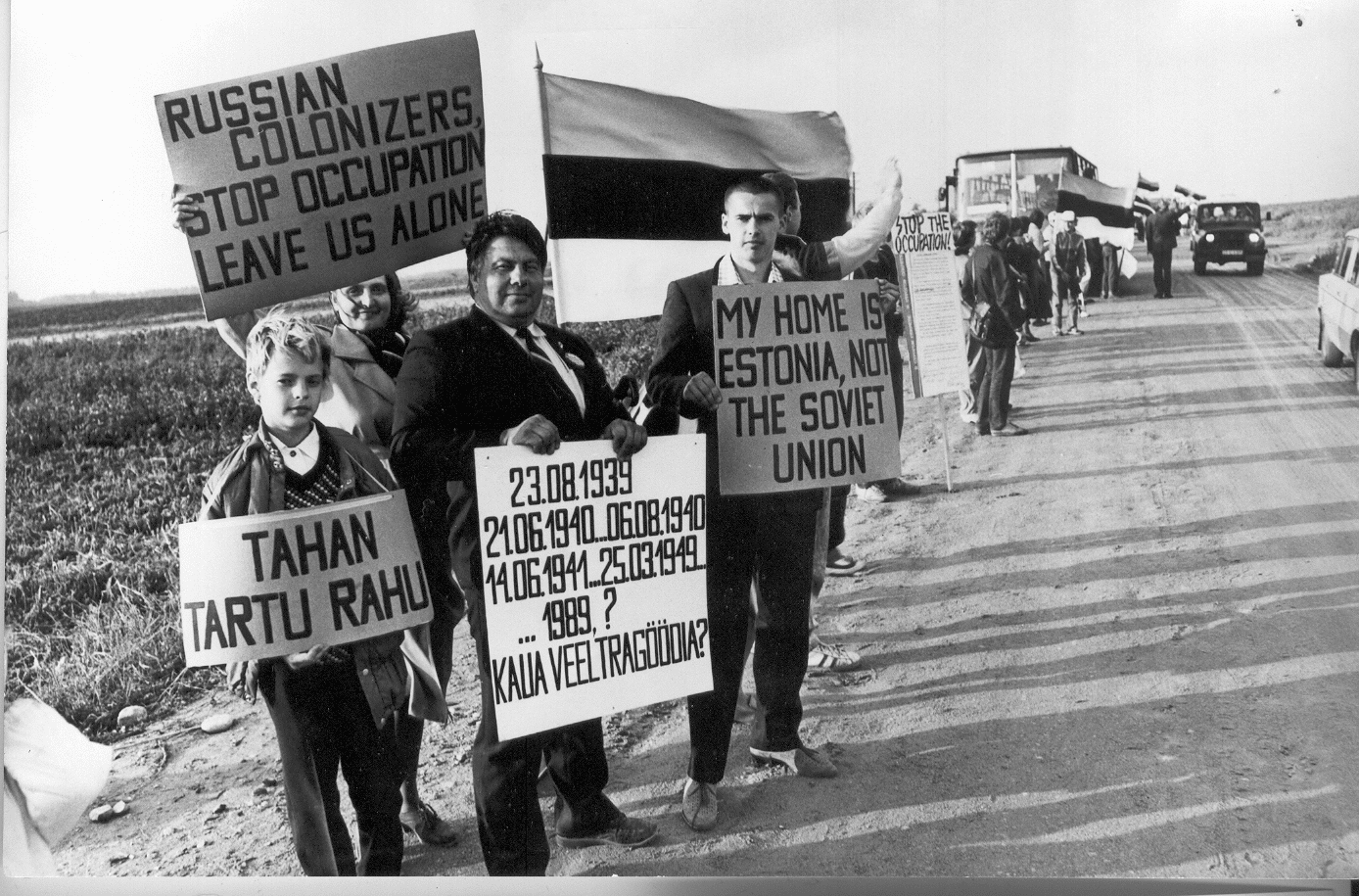
What impact could a paper poster possibly make in the time of social media?
The following workshop will cover the topic of posters of political activism in the following order:
1. Historical background (recommended time 15m)
2. Analysing historical examples (20m)
3. Some tips and tools for creative process (15m)
4. Creating your own poster (30m)
5. Presenting your posters to the rest of the class (10m)
We recommend to start from going through the slides, watching the tutorial video if necessary, and then go through the sources for more detailed background information to use in the classroom or for individual research.
The workshop has been compiled by Ede Schank Tamkivi (NoVa), Bridget Deirdre Phillips (Stanford University) and Pin Morghan Valgeväli (Tartu Art School) as part of the “Born in 1989” project funded by CERV.
Instructions
Though we encourage you to seek out new and provocative poster examples to include in your discussion sections, we have also compiled a poster guide for your convenience.
Each poster in this guide corresponds with a number, which you may seek out in the 1989-Project_Poster-Selection Google Drive. You may add these files to your slidedeck presentation.
The posters listed in this guide were circulated in Estonia between 1941 and 2011. Some were mobilized to subdue and torment; others, to educate and liberate. Whether these posters spout Nazi propaganda or promote Estonian political candidates, all harness visuals to articulate ideas.
Note
For the sake of consistency, titles have been translated to English. To access original titles, click on the hyperlinked website titles and accession numbers.
Introduction video:
Sources
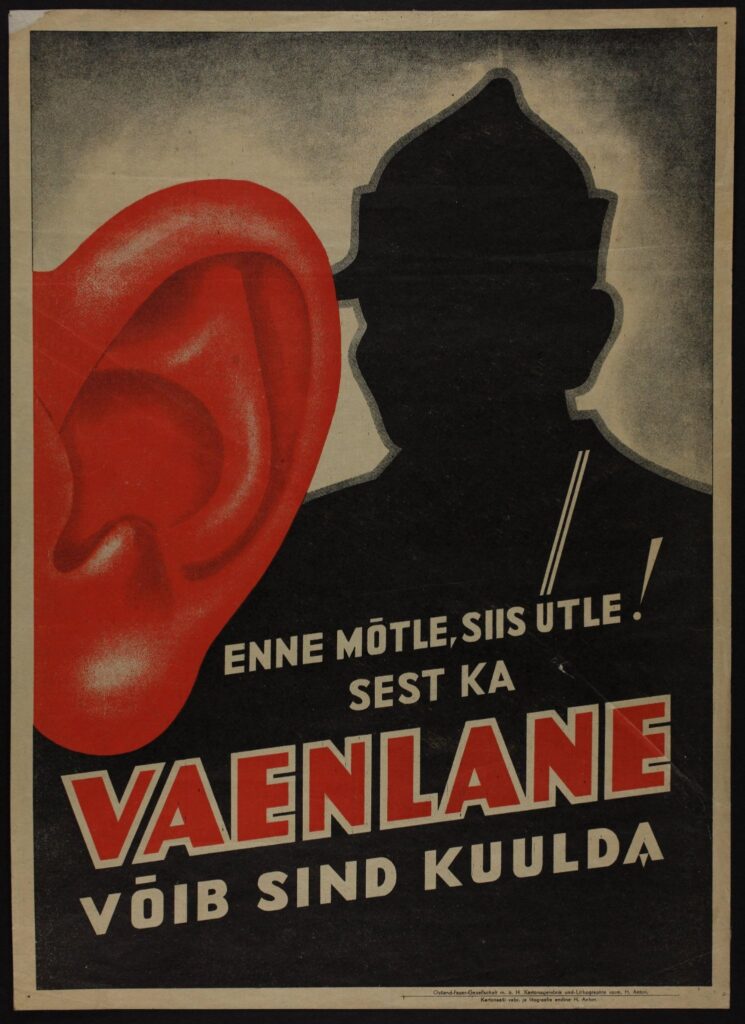
Poster calling for caution against eavesdropping
Date: Undated (1941-1944?)
Accession Number: ERA.4420.2.6
Chicago Style Citation (17th ed.): Poster Calling for Caution against Eavesdropping. Undated (ca. 1941–1944). Accession no. ERA.4420.2.6. Saaga Digital Archive.
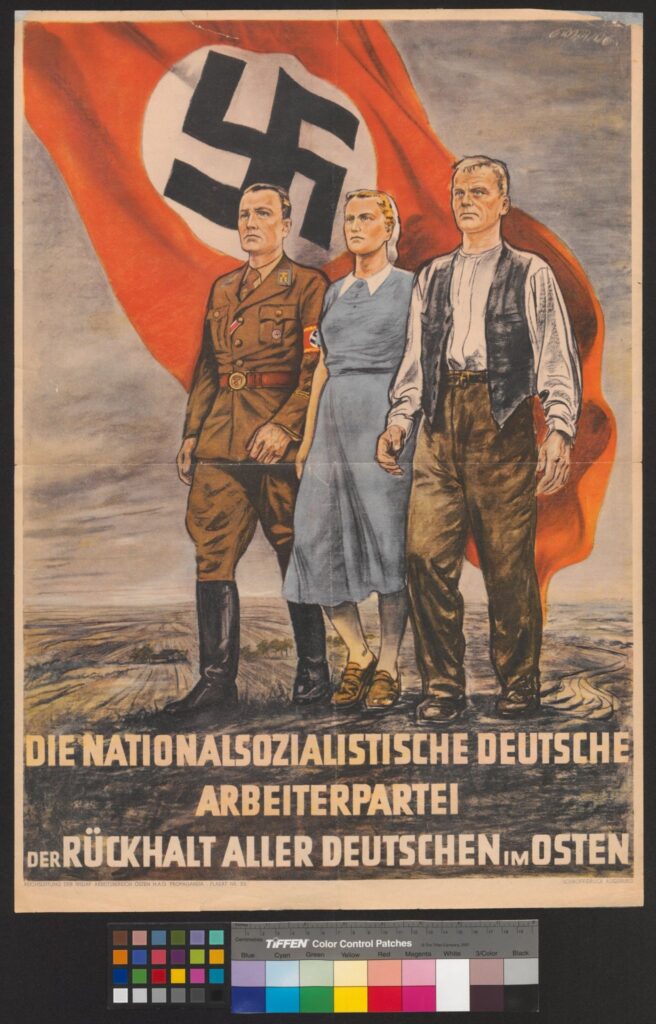
Poster calling for joining the ranks of the National Socialist German Workers’ Party (NSDAP)
Date: undated (1941-1944?)
Accession Number: ERA.4420.2.10
Chicago Style Citation (17th ed.): Poster Calling for Joining the Ranks of the National Socialist German Workers’ Party (NSDAP). Undated (ca. 1941–1944). Accession no. ERA.4420.2.10. Saaga Digital Archive.
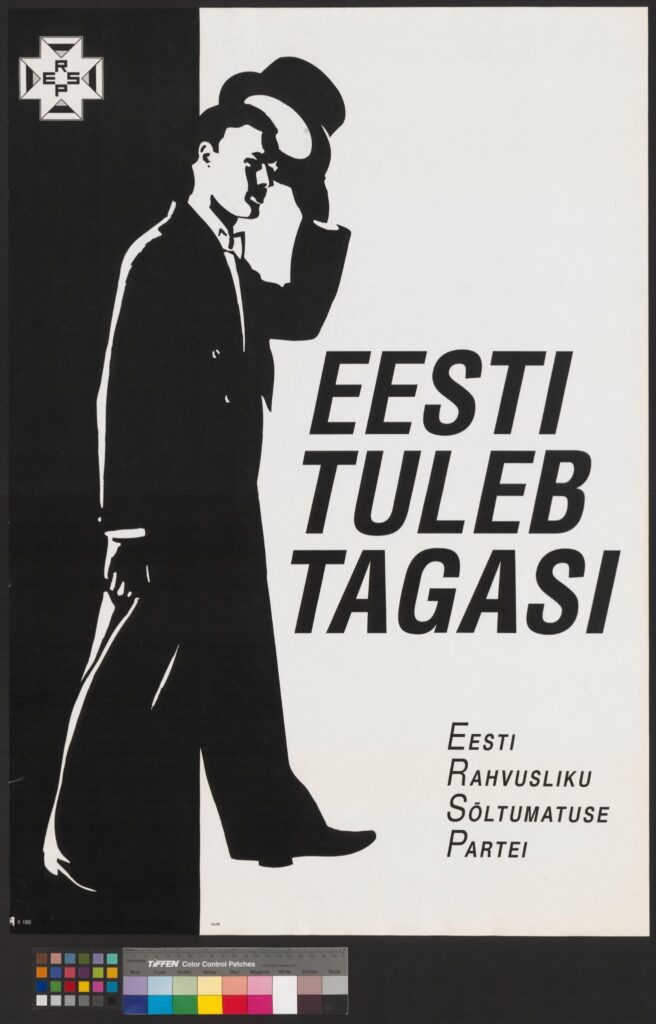
Poster with the caption “Estonia is coming back”
Date: 1991
Accession Number: ERAF.9597.1.5
Chicago Style Chicago Style Citation (17th ed.) (17th ed.): Estonia Is Coming Back. 1991. Accession no. ERAF.9597.1.5. Saaga Digital Archive.Date: 1991
Chicago Style Chicago Style Citation (17th ed.) (17th ed.): Estonia Is Coming Back. 1991. Accession no. ERAF.9597.1.5. Saaga Digital Archive.
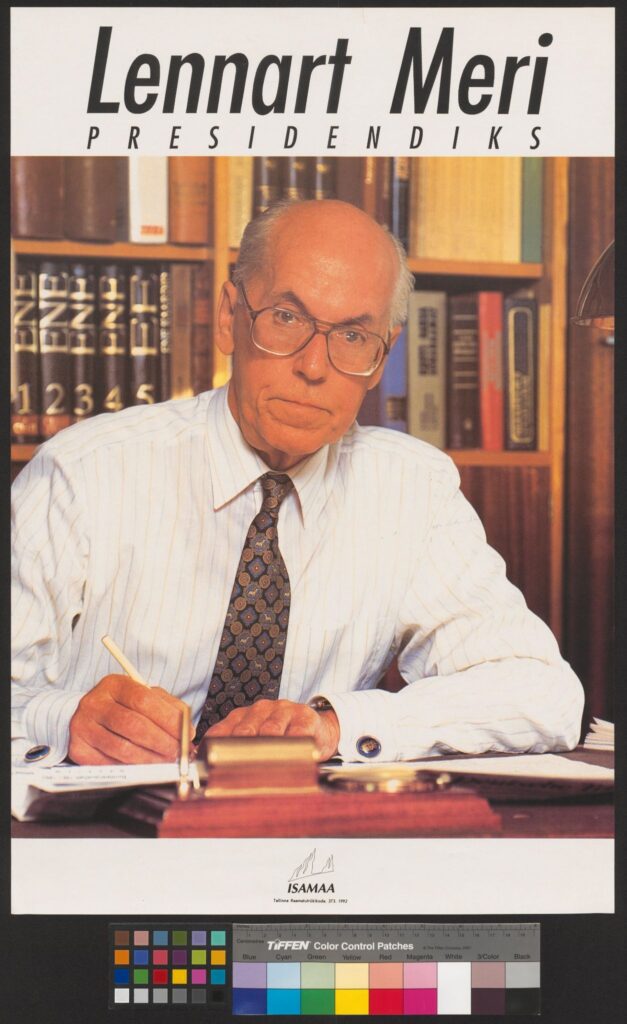
Election poster of presidential candidate Lennart Meri
Date: 1992
Accession Number: ERAF.9597.1.36
Chicago Style Citation (17th ed.): Election Poster of Presidential Candidate Lennart Meri. 1992. Accession no. ERAF.9597.1.36. Saaga Digital Archive.
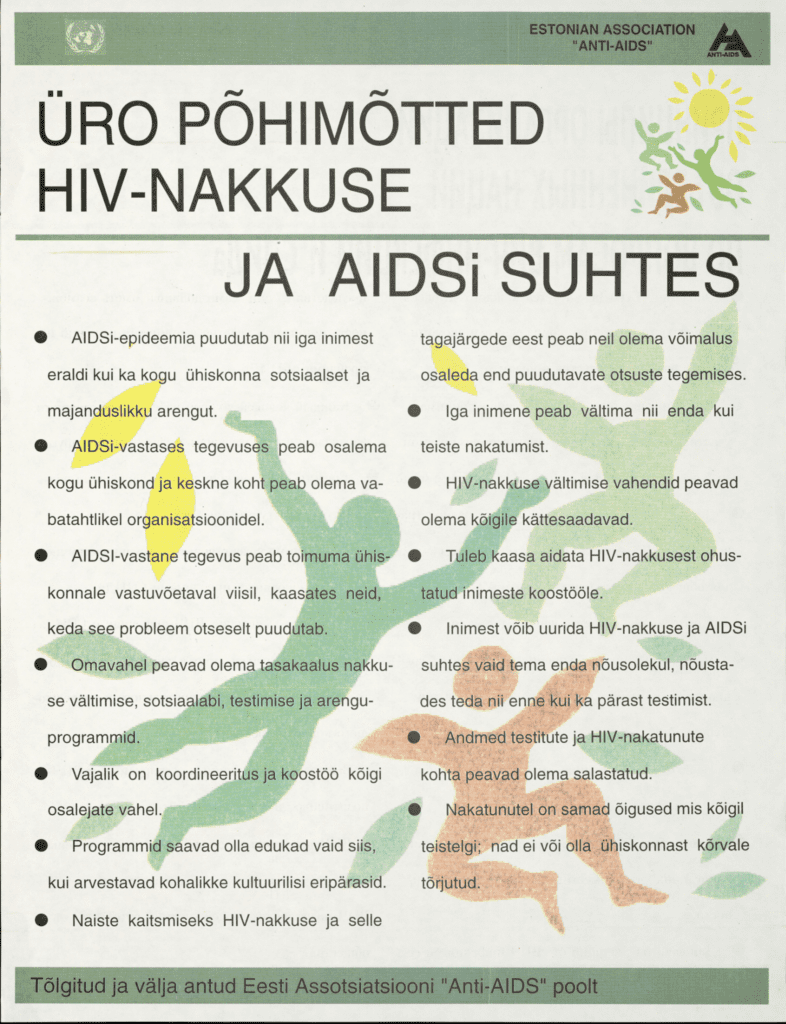
UN Principles on HIV/AIDS: Translated and published by the Estonian Association
Date: 1987-1995
Accession Number: 306, item ER001.
Chicago Style Citation (17th ed.): UN Principles on HIV/AIDS: Translated and Published by the Estonian Association. 1987–1995. Accession no. 306, item ER001. UCLA Digital Collections.
Estonian Museums Web Portal (MuIS)
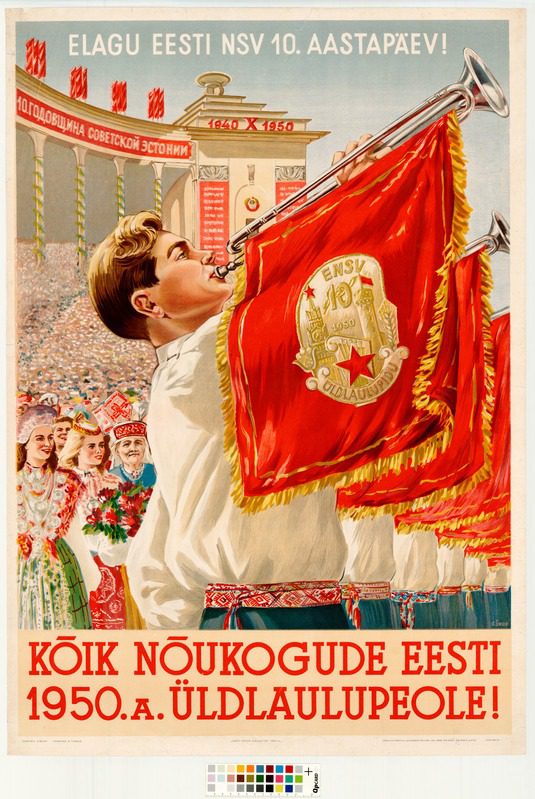
Poster with the Caption “Long live the 10th anniversary of the Estonian SSR! All to the 1950 General Song Festival of Soviet Estonia!”
Date: 1950
Accession Number: AM _ 3226:1 F158 1:38
Chicago Style Citation (17th ed.): Poster with the Caption “Long live the 10th anniversary of the Estonian SSR! All to the 1950 General Song Festival of Soviet Estonia!”. 1950. Accession no. AM _ 3226:1 F158 1:38. Estonian History Museum Foundation. Estonian Museums Web Portal (MuIS).
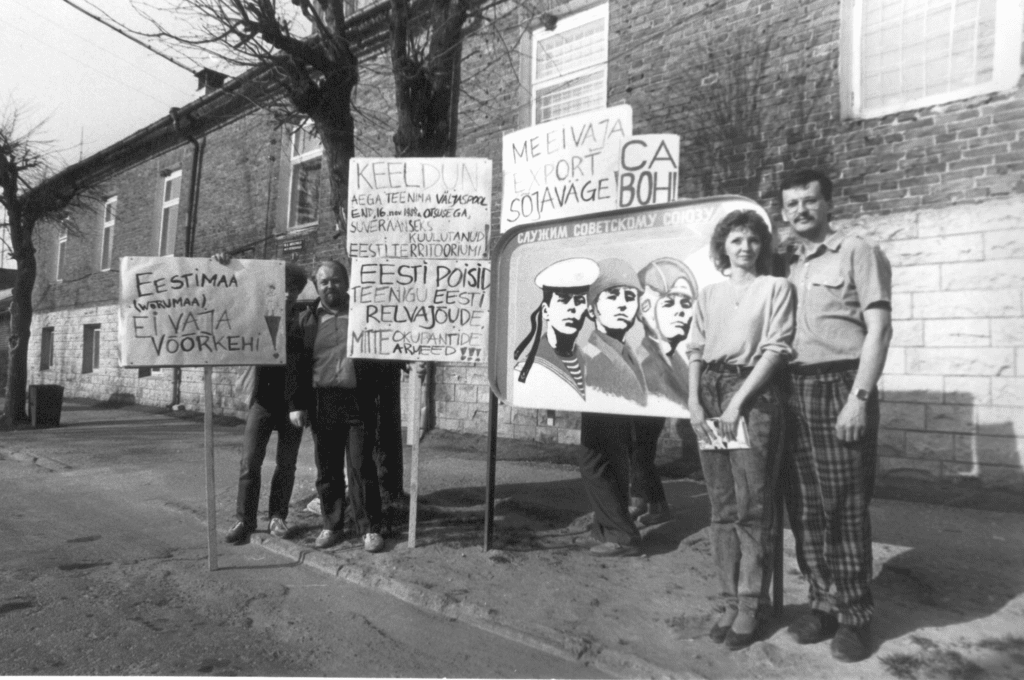
Photo of the April 14, 1989 protest by Vaba-Sõltumatu Kolonn No. 1 and heritage preservation activists in front of the Võru Military Commissariat
Date: April 14, 1989
Accession Number: VK F 1643:30 F
Chicago Style Citation (17th ed.): Photo of the April 14, 1989 Protest by Vaba-Sõltumatu Kolonn No. 1 and Heritage Preservation Activists in Front of the Võru Military Commissariat. April 14, 1989. Accession no. VK F 1643:30 F. Võru County Museum. Estonian Museums Web Portal (MuIS).
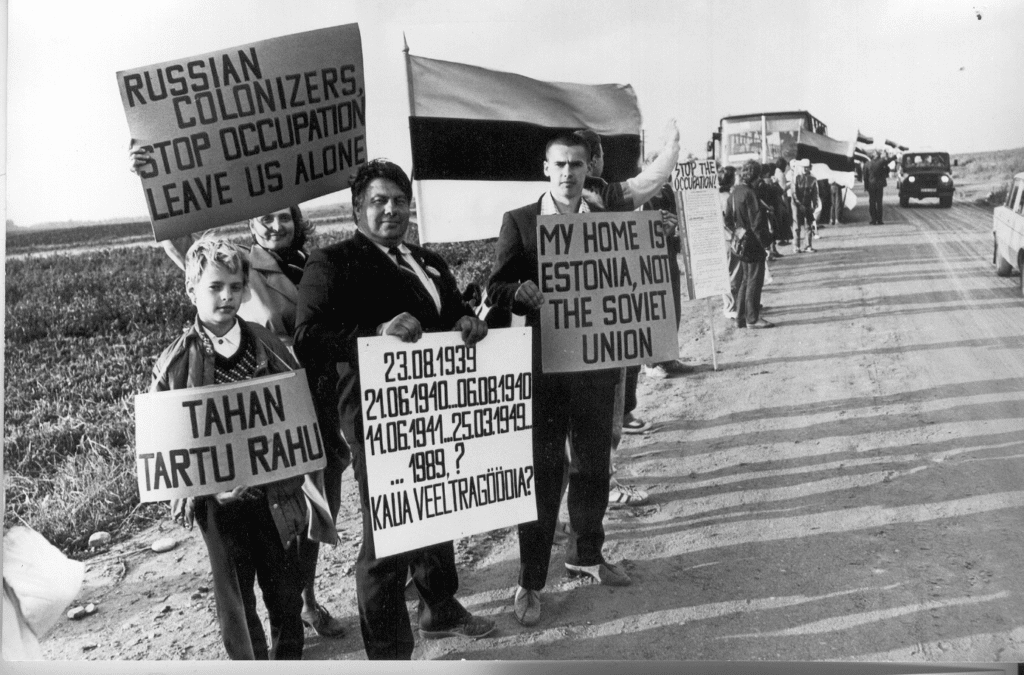
“Baltic Chain” Photo Featuring Kersti Pai’s Family and Popular Front Members
Date: August 23, 1989
Accession Number: VK F 1644:13 F
Chicago Style Citation (17th ed.): Photo of Baltic Chain, Kersti Pai’s Family and Popular Front Members in the Column. August 23, 1989. Accession no. VK F 1644:13 F. Võru County Museum. Estonian Museums Web Portal (MuIS).
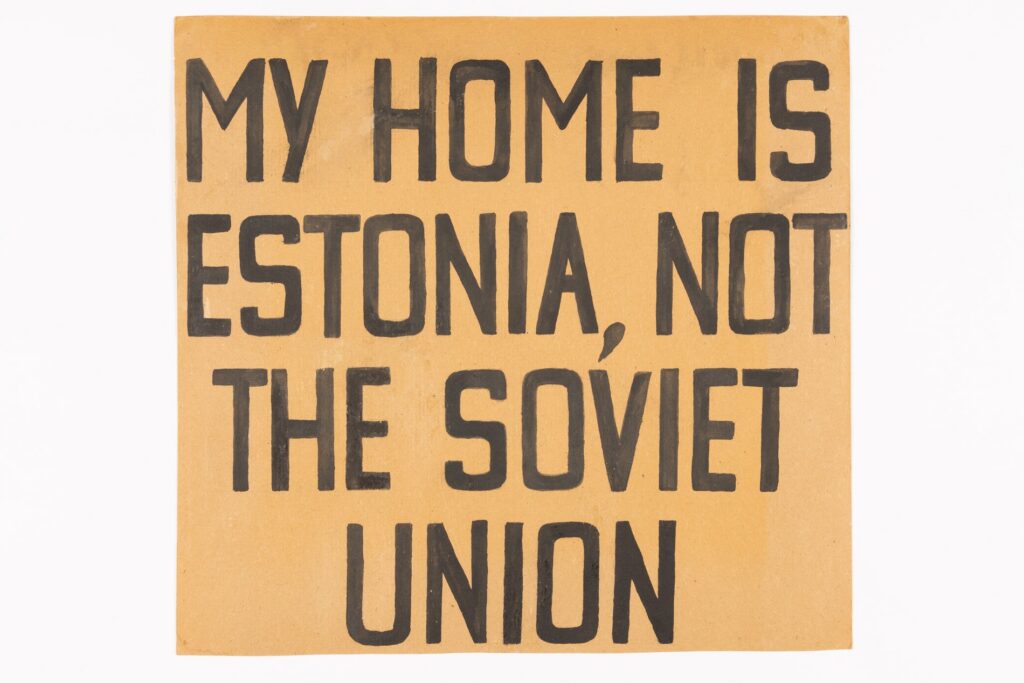
Poster with the Caption “My Home is Estonia, Not the Soviet Union.”
Date: August 1989
Accession Number: ERM D 244:3
Chicago Style Citation (17th ed.): Pai, Kersti. Poster with the Caption “My Home Is Estonia, Not the Soviet Union.” August 1989. Accession no. ERM D 244:3. Estonian National Museum. Estonian Museums Web Portal (MuIS).
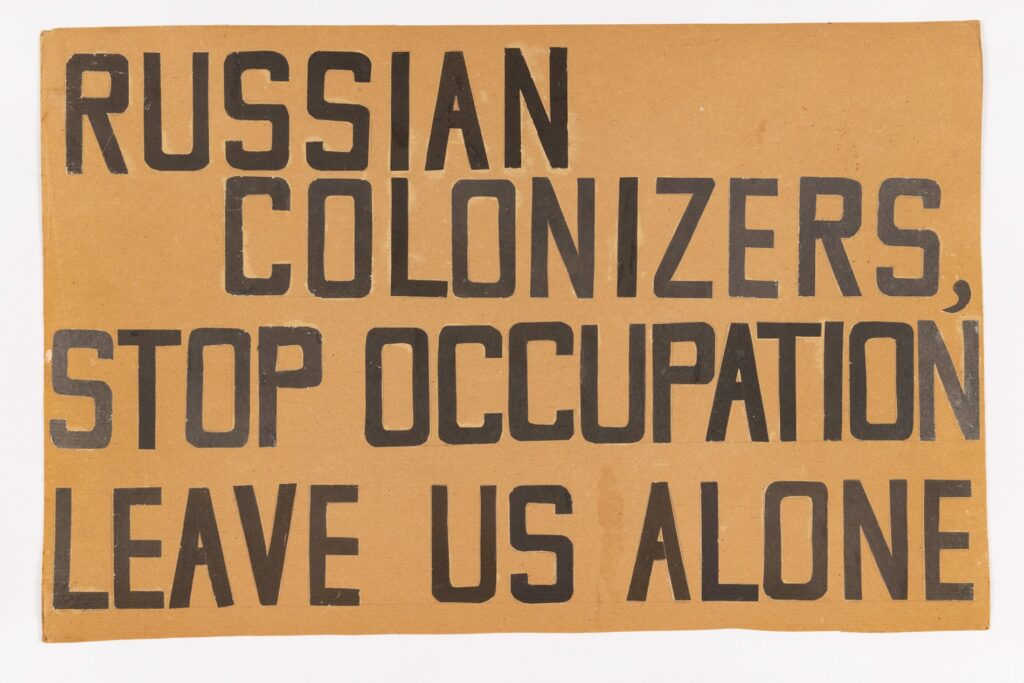
Poster with the Caption “Russian Colonizers”
Date: August 1989
Accession Number: ERM D 244:2
Chicago Style Citation (17th ed.): Pai, Kersti. Poster with the Caption “Russian Colonizers.” August 1989. Accession no. ERM D 244:2. Estonian National Museum. Estonian Museums Web Portal (MuIS).
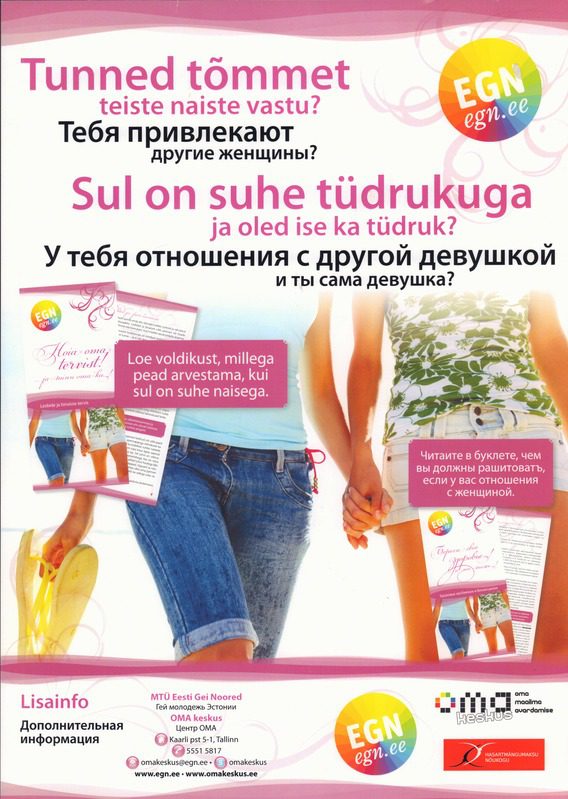
Estonian Gay Youth Poster
Date: 2010–2011
Accession Number: HMK 9750 AR 5829
Chicago Style Citation (17th ed.): Estonian Gay Youth Posters. 2010–2011. Accession no. HMK 9750 AR 5829. Harju County Museum. Estonian Museums Web Portal (MuIS).
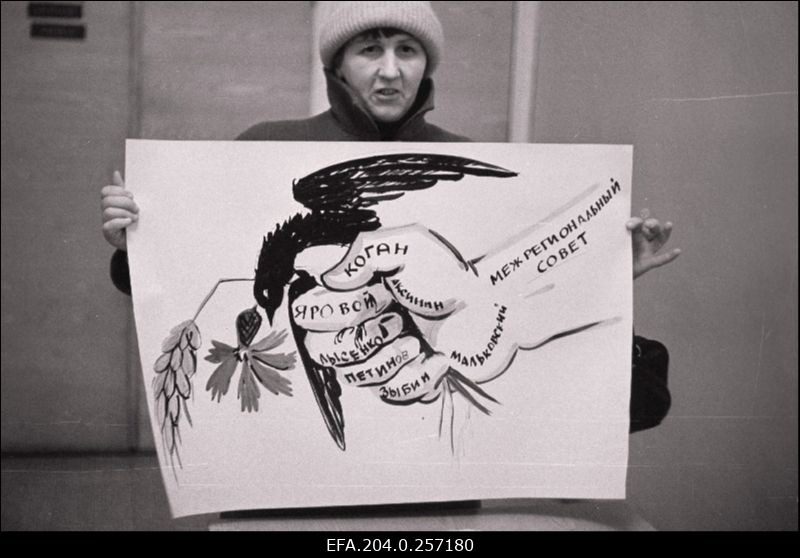
Anti-intrigue poster!
Date: November 12, 1990
Accession Number: EFA.204.0.257180
Chicago Style Citation (17th ed.): Trey, Liza. Anti-intrigue poster!. Photograph. 1991.
Accession no: EFA.204.0.257180. Film Archive, National Archive of Estonia.
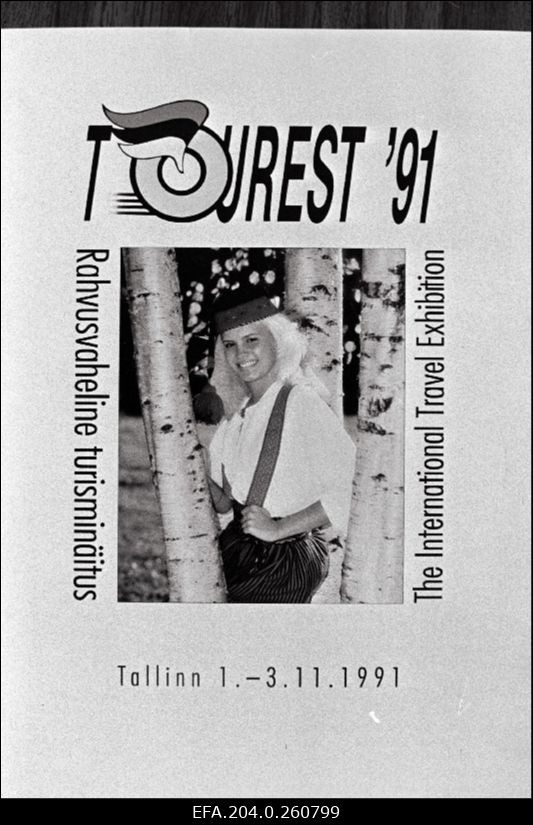
Poster advertising international tourism exhibition “Tourest ’91” in the exhibition pavilion.
Date: January 1–March 11, 1991
Accession Number: EFA.204.0.260799
Chicago Style Citation (17th ed.): Langovitz, Peter. International tourism exhibition “Tourest ‘91” in the exhibition pavilion. Photograph. January 1–March 11, 1991. Accession no: EFA.204.0.260799. Film Archive, National Archive of Estonia.
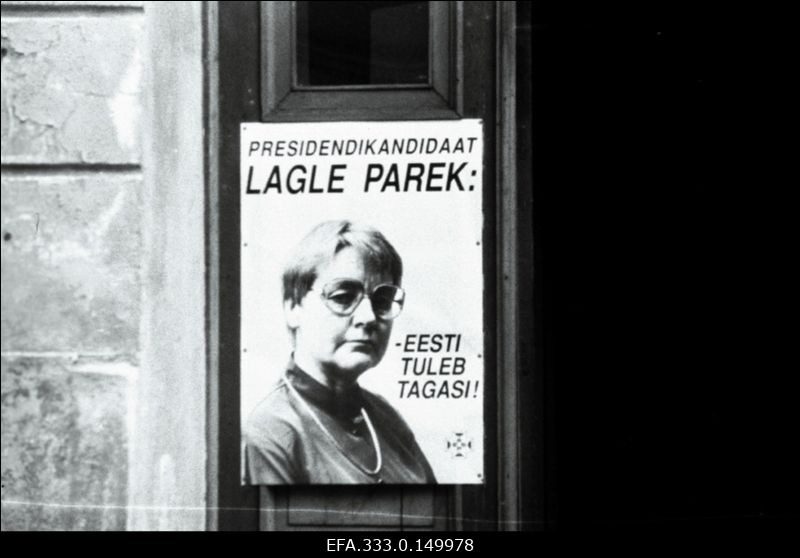
Pre-election poster of presidential candidate Lagle Parek.
Date: September, 1992.
Accession Number: EFA.333.0.149978
Chicago Style Citation (17th ed.): Ojaste, Urmans. Pre-election poster of presidential candidate Lagle Parek. Photograph. September 1992. Accession no: EFA.333.0.149978. Film Archive, National Archive of Estonia.
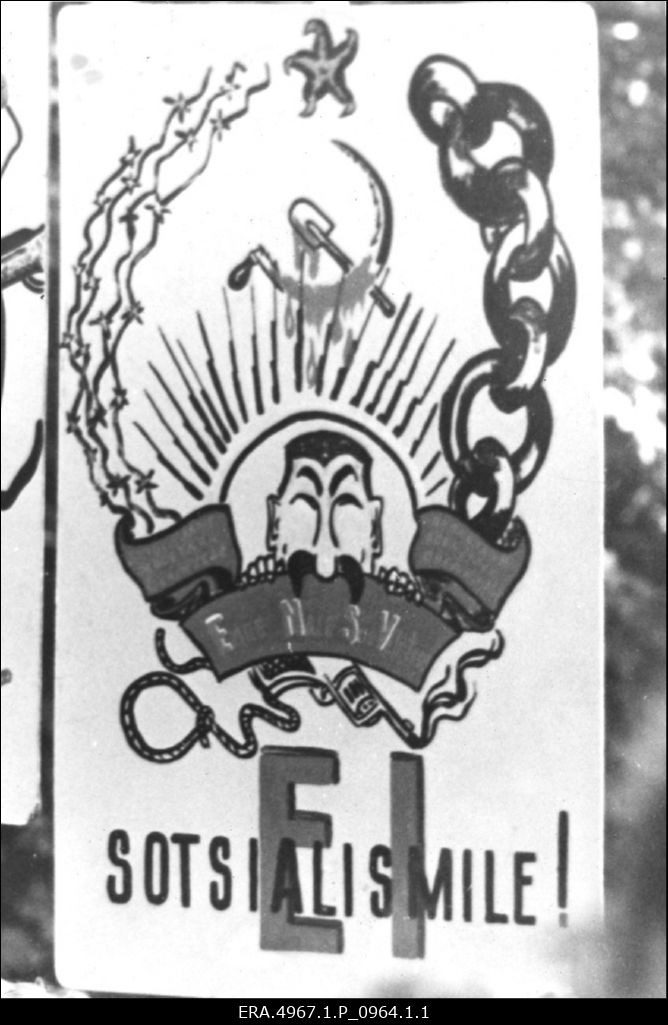
“No to socialism!” at the public meeting in Hirvepark organized by the Tallinn Cooperation Committee to celebrate the signing of the Molotov-Ribbentrop Pact.
Date: August 23, 1989.
Accession Number: ERA.4967.1.P_0964.1.1.
Chicago Style Citation (17th ed.): Poster “No to socialism!” at the public meeting in Hirvepark organized by the Tallinn Cooperation Committee to celebrate the signing of the Molotov-Ribbentrop Pact. Photograph. September 1992. Accession no: ERA.4967.1.P_0964.1.1. KGB Intelligence Department Photo Collection, Film Archive, National Archive of Estonia.