

Special Operation “Breaking Wave” or Priboi
The collectivisation of agriculture – creating state run collective farms, aka kolkhozes in occupied territories – was one of the Soviet government’s key priorities. In Estonia, however, farmers were reluctant to join kolkhozes voluntarily. Due to this, beginning in 1949, collectivisation was enforced through brutal repressions, including the mass deportation of farmers and their families to Siberia.
In 1947, the Council of Ministers of the Estonian SSR issued a decree on “The Taxation of Farms in the Estonian SSR,” which effectively defined the status of kulak. A kulak was a Soviet term for a relatively prosperous or independent farmer, often targeted as an enemy of collectivisation regardless of actual wealth. Two years later, the Soviet authorities instructed each country on the number of so-called kulak families to be sent to Siberia. In Estonia, deportations began on March 25th and lasted three days. In total, 20 702 people were deported from Estonia to remote parts of the Soviet Union in 1949. In comparison, about 30 000 were deported from Lithuania and 43 000 from Latvia. Operation Priboi (“Breaking Wave”) uprooted nearly 100,000 people across the Baltic states – around 3% of their combined population.
In Estonia, women (49.4%) and children (29.8%) made up the majority of those deported. The youngest known deportee was three-day-old Anne Ojaäär from Hiiumaa; the oldest, 95 year old Maria Räägel from Abja parish.
Deportees were sent to some of the most remote regions of Siberia, including Krasnoyarsk, Novosibirsk, Omsk, Irkutsk, and Amur Oblast. Resettlement was “for life,” with strict surveillance and a prohibition on leaving assigned areas. Attempted escape could lead to 20 years of forced labour in prison camps. Conditions were especially harsh for families in which only the mother was able to work, often supporting both children and elderly parents. Such households fought daily for survival throughout the period of forced exile.
One in eight deportees – around 3,000 people – never returned to their homeland.
While exploring this material, reflect on the following questions:
1. In what other ways might we study history? How can personal stories, objects, and memories deepen or change our understanding of historical events?
2. Consider the international definition of genocide. Could the Stalinist deportations of the Baltic people be understood as an act of genocide?
3. Why is it important to speak about crimes against humanity committed more than 75 years ago?
4. If you were to create a memorial to the victims of deportation, repression, and discrimination, what form would it take? Would it be a physical monument, or something different entirely?
From the Vabamu collections
Vabamu’s permanent exhibition and archives contain a number of objects that helped those deported to Siberia in 1949 endure the hardships of exile. Here, we introduce some of them.
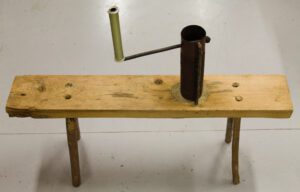
Johannes Prost, son of Jaan, was born on January 21st 1908 in Ilmatsalu village, Tähtvere parish, Tartu County, to Jaan and Julie-Elisabeth Prost. On March 14th 1949, by decision of the Council of Ministers of the Estonian SSR, he was deported to Cherlak District in Omsk Oblast together with his wife Salme, son Endel, and daughter Eha.
In the village of Ivanovka, Cherlak District, there was a close-knit community of deportees from Estonia. Sadly, death from illness and hunger was an everyday reality there. A hand-held grinding mill built by Prost helped to ease food shortages. The mill was passed from household to household in Ivanovka, and even long-time local residents began to use it. Older children from the village recall that the milling had to be done quickly, since other families were often waiting their turn. Despite its intensive use, the mill remains in working order today and has been featured in Vabamu’s collection during several “Generations Meetup” events.
The Prost family was released from exile on August 29th 1957. Johannes died on March 28th 1991.
“Mother, where are we going?”
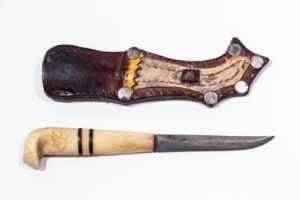
Maret Reinmets was only five years old when she was deported to Siberia in 1949 together with her mother, Leida Reinmets. In the early 1930s, while undergoing medical treatment in Switzerland, Leida had purchased a small knife, which she now took with her on the long journey. Maret recalls in her memoirs:
“This blade was a real help, as we had nothing else sharp to cut with. While we were slowly making our way towards Achinsk, my mother used it to cut a small hole in the wall of the railway wagon – about two or three centimetres big. I remember that through this little ‘window’ we could see a glimpse of the outside world. The best view was from my mother’s lap, a little higher up. I often asked where we were going, but I don’t think I ever got an answer.”
Born in 1944, Maret was deported with her mother on 25 March 1949 to Achinsk in Krasnoyarsk Krai. The official reason given was that her father, Juhan Reinmets, had been a member of the Omakaitse (Home Guard) and her mother’s family were industrialists. According to the paperwork, she was released on July 5th 1954, but in reality she returned to Estonia on August 30th 1955.
Cattle Wagons
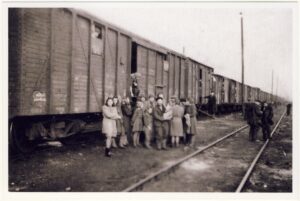
This black-and-white photograph of deportation wagon number 45 was taken in the Ural Mountains in April 1949. On board were people from Võru, Valga, Tartu, and Pärnu, deported from Estonia on March 25th. The third person from the left is Helju Pihu, who was deported with her mother, Helmi Pihu, and father, Oskar Pihu, to Usolye District in Irkutsk Oblast. The entire family was released on July 2nd 1958.
The sides of the deportation wagons, visible in the background, were fitted with sliding doors, while the shuttered windows were placed high up near the ceiling. Colloquially, these wagons were known as “cattle cars.”
Online museum and memorial
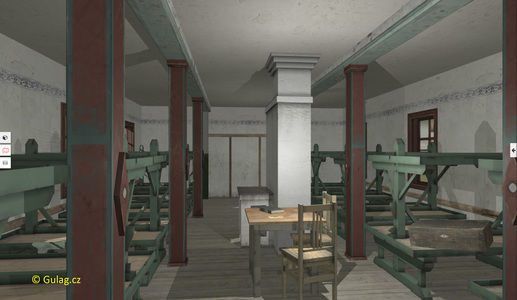
Using objects, documents, prisoner testimonies, and digital reconstructions, the Gulag Online virtual museum brings to life the grim reality of Soviet repression.
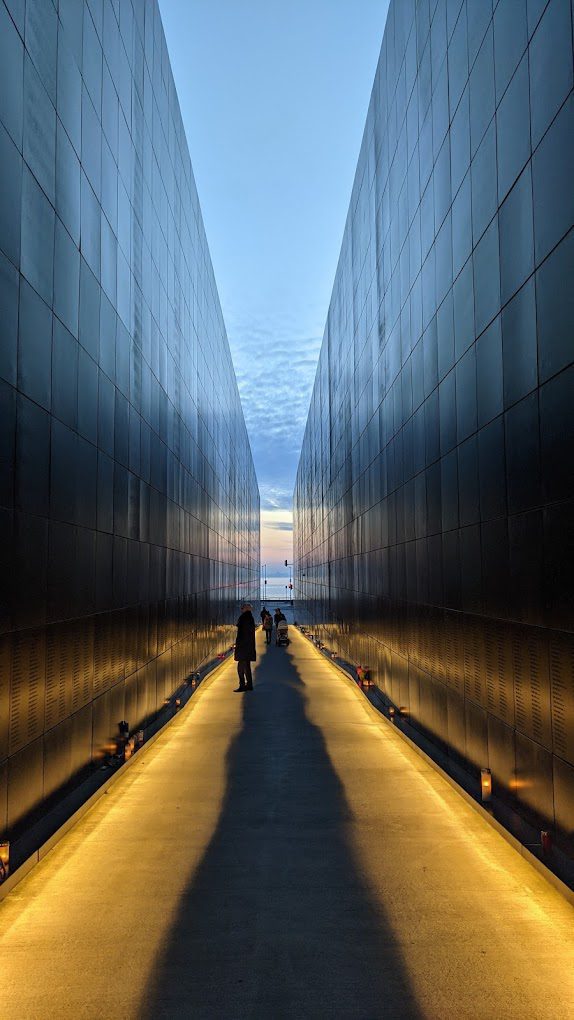
Online memorial contains information about victims of communism who were repressed, deported, or executed.
A large collection of personal memories from Estonians deported to Siberia is preserved in the Kogu Me Lugu video archive.